
Symptoms and service
What’s changed with your oven?
Single and double wall ovens, steam ovens and combination installations need to be identified accurately. A control message that is normal on one model may have a different meaning on another. We use the model information to guide the examination instead of treating every display or preheat complaint alike.
Preheating does not behave as expected
Describe whether the oven never begins warming, warms only partway or reaches the setting and then struggles during cooking. Record the mode and whether the change followed a power interruption or cleaning cycle. A single temperature reading without this context can be misleading.
One cavity or cooking mode is affected
For a double oven, make clear whether the upper, lower or both cavities have the problem. Note which modes you have observed during normal use. There is no need to repeatedly operate an appliance that has shown an electrical or overheating concern.
The door, fan or controls have changed
A door that will not close fully or an unfamiliar fan sound can affect heating. Tell us when the change occurs, including during cool-down. An audible fan after cooking is not automatically evidence of a fault; the model and duration matter.
What we check.
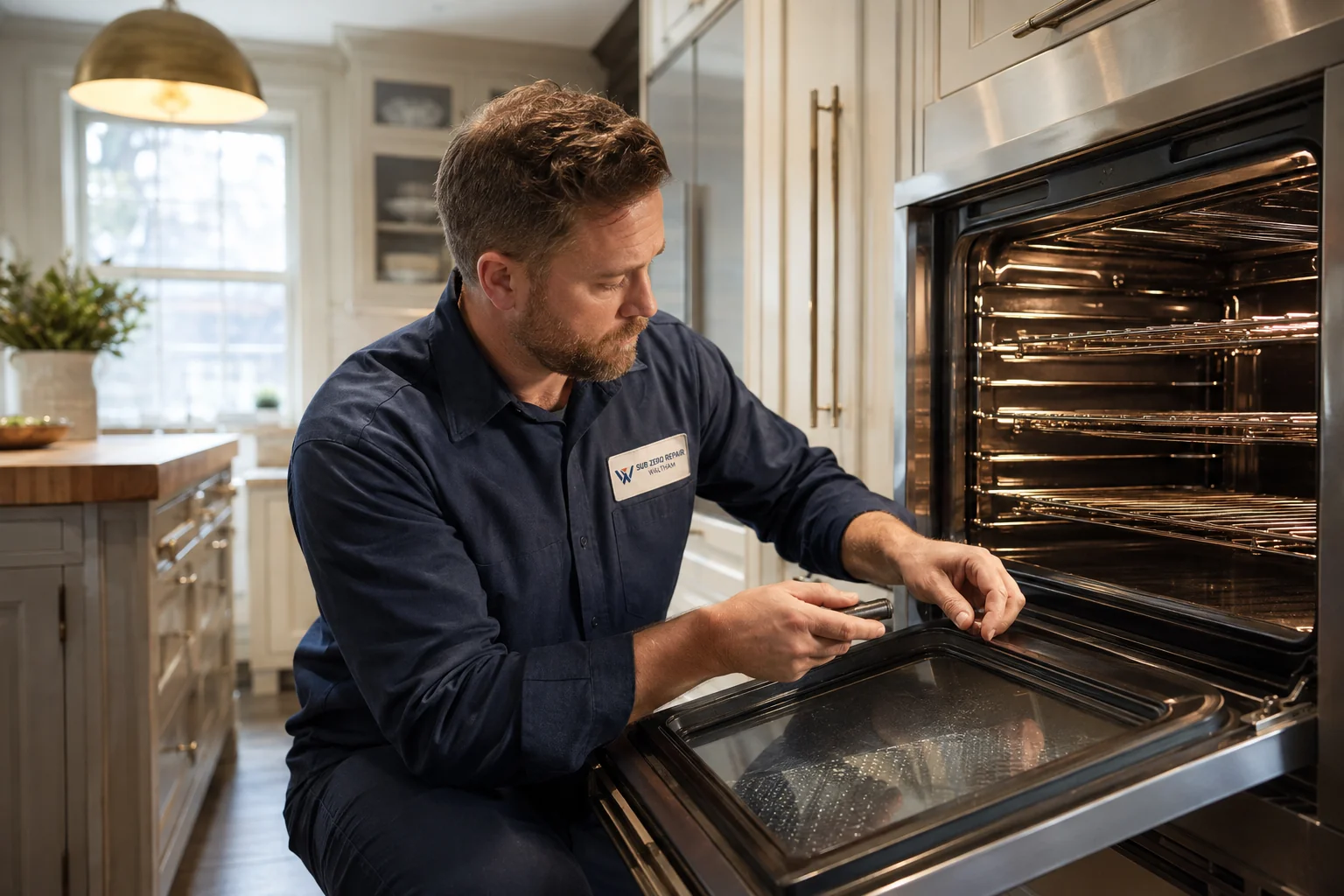
We check the affected cavity and cooking mode, including heating response, temperature sensing, fans and controls as needed. On a double oven, we compare how the two cavities behave. Steam and combination models need checks suited to their additional functions.
Getting ready for service.
Let the oven cool, remove loose cookware and leave the area in front of it clear. Save a photo of an intermittent message. Do not begin a self-clean cycle as a repair attempt, remove the oven from the wall or open electrical covers. Share whether previous work changed the installation or controls.
Which cavity and cooking mode are affected?
- On a double oven, identify the upper or lower cavity.
- Name the mode you were using, such as bake, broil, convection or steam.
- Mention a problem that started after a power interruption, cleaning cycle or recent repair.
For the controls and care instructions specific to your model, consult Wolf owner support .